Imagine a pallet leaving a UK warehouse in 2026. Over the next 5 weeks it will be loaded onto a truck, transferred to a container at Felixstowe, shipped through the Suez Canal, handled at multiple transhipment ports, moved by rail across a continental network and finally delivered by road to a distribution centre in Southeast Asia. Throughout this journey the cargo will experience temperature fluctuations from near freezing to 40°C, humidity levels above 90%, sustained vibration, stacking loads of several tonnes and handling by dozens of people who have never seen the product inside.
Export packaging refers to the complete system that protects goods throughout this journey: primary packaging in direct contact with the product, protective materials such as foam or desiccants, outer cartons or cases, pallets or crates and containerisation strategies. This system has three core objectives: protect the product from physical and environmental damage, ensure compliance with international regulations at every border and optimise cost and handling efficiency across the supply chain.
Export packaging requirements are determined by the mode of transport – whether by sea, air, road or rail – and must comply with international and country specific regulations such as the IMDG Code for maritime shipments and IATA standards for air freight.
Common packaging formats for international shipping include heavy-duty corrugated cartons, wooden cases and shipping crates, heat-treated pallets, metal drums for liquids and powders and barrier films for moisture control. Each serves a specific purpose depending on product fragility, route conditions and regulatory requirements in destination countries.
Organisations such as the United Nations, in collaboration with the World Trade Organization through the International Trade Centre, provide guidance on export packaging standards and best practices.
This article is written from a business perspective for exporters who are either starting to export in 2026 or reviewing their current export packaging strategy. The guidance that follows covers damage prevention, security, mode specific requirements, cost optimisation, sustainability, compliance frameworks and supplier selection – the key points that determine whether goods arrive intact and on time.
Choosing the right packaging materials is a critical step in ensuring the safety and integrity of goods during international shipping. The choice of material directly affects how well export packaging can protect products from the rigours of global transport and how easily shipments comply with international regulations.
For example, wood packaging is often used for exporting heavy items or machinery because of its strength and durability. However, exporters must ensure all wood packaging meets ISPM 15 standards to prevent the spread of forest pests and timber diseases – non-compliance can result in costly delays or rejected shipments at the border.
Carton packaging is a popular option for lighter or less fragile goods. It’s a cost effective and lightweight solution that can reduce shipping costs but may not provide sufficient protection for valuable items or those sensitive to impact and environmental conditions. When choosing between materials exporters must carefully consider the specific requirements of their products, taking into account weight, fragility and destination country regulations.
Environmental impact is another key consideration. Many countries are tightening up rules around packaging waste and recyclability so it’s essential to select materials that not only protect the shipment but also align with sustainable practices. Whether choosing wood, carton or alternative materials exporters must balance protection, cost and environmental responsibility to ensure their packaging solutions support both compliance and long term business goals.
International shipping in 2026 faces a combination of physical stresses that domestic logistics rarely encounter. A shipment may experience drops of up to 1.2 metres during loading, sustained vibration frequencies between 3–200 Hz on trucks and vessels, compression loads of over 3,000 kg in stacked containers and climate variations from subzero warehouse cold-stores to tropical port environments.
Transit times range from 48 hours for air cargo on major lanes to 45+ days for sea freight from Northern Europe to Australasia. International shipping packaging is a specialized solution designed to protect cargo during long distance, cross border transportation, to ensure goods are protected from these unique challenges.
Effective protection not only reduces the risk of damage and loss but also meets international standards and regulatory requirements. Export packaging is essential for protecting fragile, high value or heavy goods from multiple handling points, high impact risks and stacking pressure during international transit.
The main hazards facing export shipments include:
Risk Category | Typical Cause | Consequence |
|---|---|---|
Shock and impact | Drops during loading/unloading, forklift collisions | Immediate product fracture, component displacement |
Sustained vibration | Road transport, vessel engine frequencies | Fatigue failure, abrasion, loosening of fasteners |
Compression | Vertical stacking in containers, pallet jacks pressure | Carton collapse, crushing of contents |
Rough handling | Congested ports, manual handling in developing markets | Dents, punctures, seal failures—packaging must be sealed securely to prevent leaks and spills, especially for liquids and powders |
Packaging for export must be engineered to withstand specific test conditions relevant to the target routes. Standards such as ISTA (International Safe Transit Association) and ISO protocols simulate drops, vibration and compression to validate packaging performance before production runs. For example, ISTA 3A testing replicates the stresses of a parcel shipment through an integrated carrier network, while ISTA 3E simulates unitised loads on pallets.
Material selection varies by product category:
Effective protection delivers benefits beyond reduced breakage. When goods arrive undamaged, customer confidence is preserved—a factor that proves decisive when entering new markets where brand reputation is still being established. Data from global trade analysis indicates that properly specified packaging can reduce damage claims from 10–15% of shipment value to below 2%.
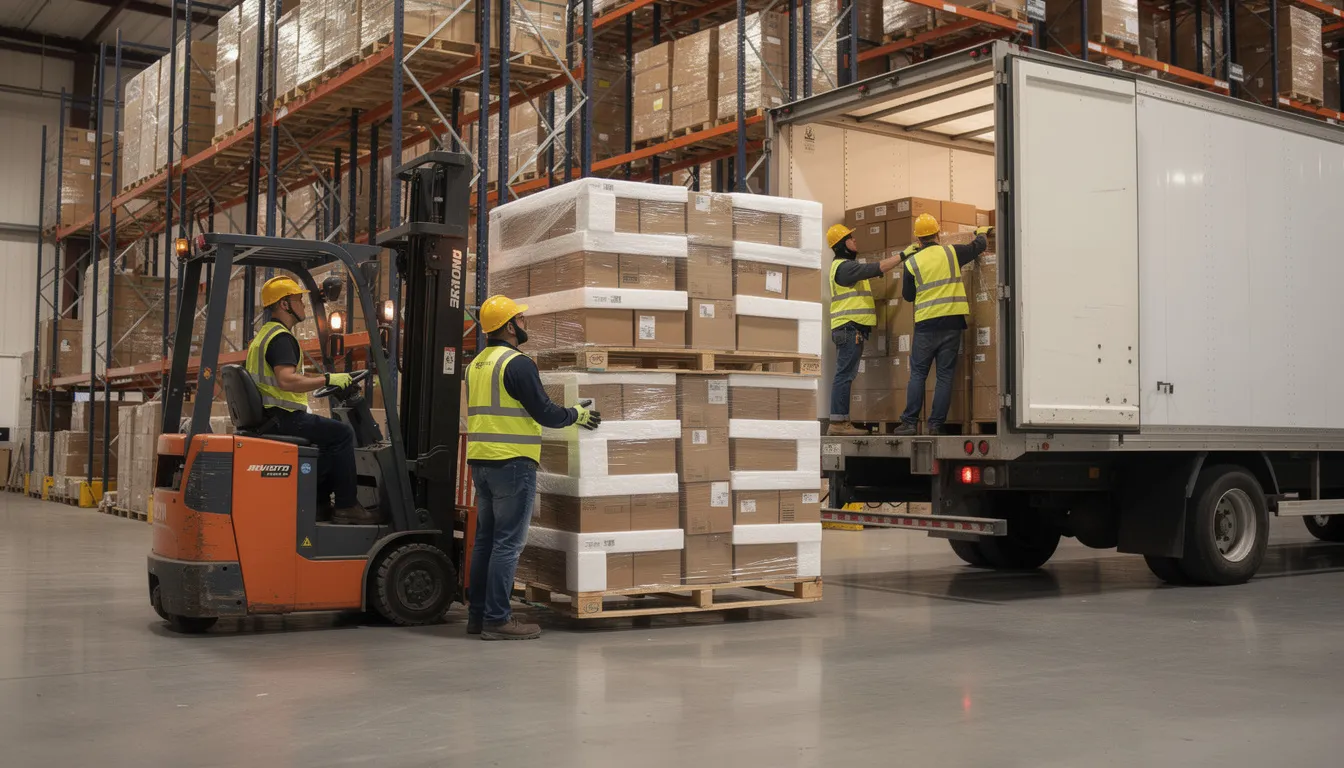
Export consignments pass through multiple facilities—consolidation centres, port terminals, transhipment hubs and last-mile depots—where partial theft and tampering represent tangible risks. High value goods and popular consumer brands are particularly vulnerable, with certain trade lanes experiencing documented pilferage rates that impact insurance premiums and landed costs.
Security starts with outer packaging that cannot be opened and resealed without leaving visible evidence:
For valuable items such as precision instruments or electronics, shipping crates constructed from plywood or OSB (oriented strand board) with secure straps and metal corner reinforcements provide both physical protection and deterrence.
Beyond structural robustness, several features enhance security:
A practical consideration for exporters is exterior design. Understated, plain packaging with limited branding and product descriptions avoids drawing attention in high-risk trade lanes. Detailed product information should appear on documentation rather than outer surfaces.
Coordination between packaging design and insurance conditions is essential. Insurers review whether packaging was suitable for the voyage; clearly inadequate or non-compliant packing can result in reduced or rejected claims. Exporters should align packaging specifications with Incoterms so responsibilities for loss and damage are clearly allocated between parties.
The same product may require fundamentally different packaging specifications depending on the transport mode. A shipment of precision instruments from London to New York by air faces a 7-day transit with controlled handling, while the same goods moving from Felixstowe to Singapore by sea endure 25+ days of humidity, temperature variation and mechanical stress.
Each mode of transportation directly impacts export packaging requirements, as packaging must comply with specific regulations such as the IMDG Code for sea freight and IATA standards for air freight to ensure safe and compliant international shipping. Each mode presents distinct challenges that packaging must address.
Multimodal shipments—common in global trade—require packaging designed for the toughest leg, not merely the first or last mile. A consignment travelling by truck to a rail terminal, then by sea, and finally by road to its destination must withstand the cumulative stresses of all three modes.
Goods transported by air generally require less protective packaging than goods shipped by sea due to shorter transit times and fewer handling points.
Air transport offers the shortest transit times—often 2–7 days door-to-door for major lanes in 2026—and typically involves fewer handling touchpoints than sea freight. However, chargeable weight calculations based on dimensional factors make weight and volume reduction crucial for cost control.
Key considerations for air cargo packaging:
Factor | Requirement |
|---|---|
Weight | Lightweight materials: molded pulp, engineered foam, corrugated alternatives |
Pressure changes | Packaging must tolerate altitude pressure variations in aircraft holds |
Temperature | Holds may experience temperature fluctuations; thermal protection needed for sensitive goods |
Dangerous goods | IATA (International Air Transport Association) regulations govern lithium batteries, aerosols, and hazardous goods |
For consumer electronics exported from the UK to the US by air, typical specifications include inner cushioning with polyethylene or polyurethane foam inserts, a strong outer carton with edge crush resistance above 32 ECT and bubble wrap or air pillows filling empty space to prevent movement. The packaging method must balance protection against volumetric charges that penalise oversized boxes.
Airport and integrator hub requirements may impose maximum carton dimensions or minimum strength ratings. Exporters should verify specific requirements with carriers before finalising packaging designs, particularly for air travel routes through hub facilities with automated sortation systems.
Sea freight remains the backbone of international trade, transporting around 90% of global cargo by volume. Voyages from Northern Europe to East Asia typically last 25–40 days, during which goods experience sustained humidity, temperature swings, salt air exposure and the phenomenon known as “container rain”—condensation forming inside containers as temperatures fluctuate.
Key sea freight packaging elements:
A practical example: a UK manufacturer shipping machinery components to India by sea requires ISPM 15-marked pallets to pass phytosanitary inspection, VCI barrier packaging to prevent corrosion during the 28-day voyage through humid weather conditions and outer cases engineered for stacking four layers high within the container.
Container rain poses particular risk to pharmaceuticals, electronics or powdered foods. Solutions include container liner bags, desiccant blankets suspended from container ceilings and barrier films sealed around palletised goods. These add cost but prevent losses that far exceed the packaging investment.
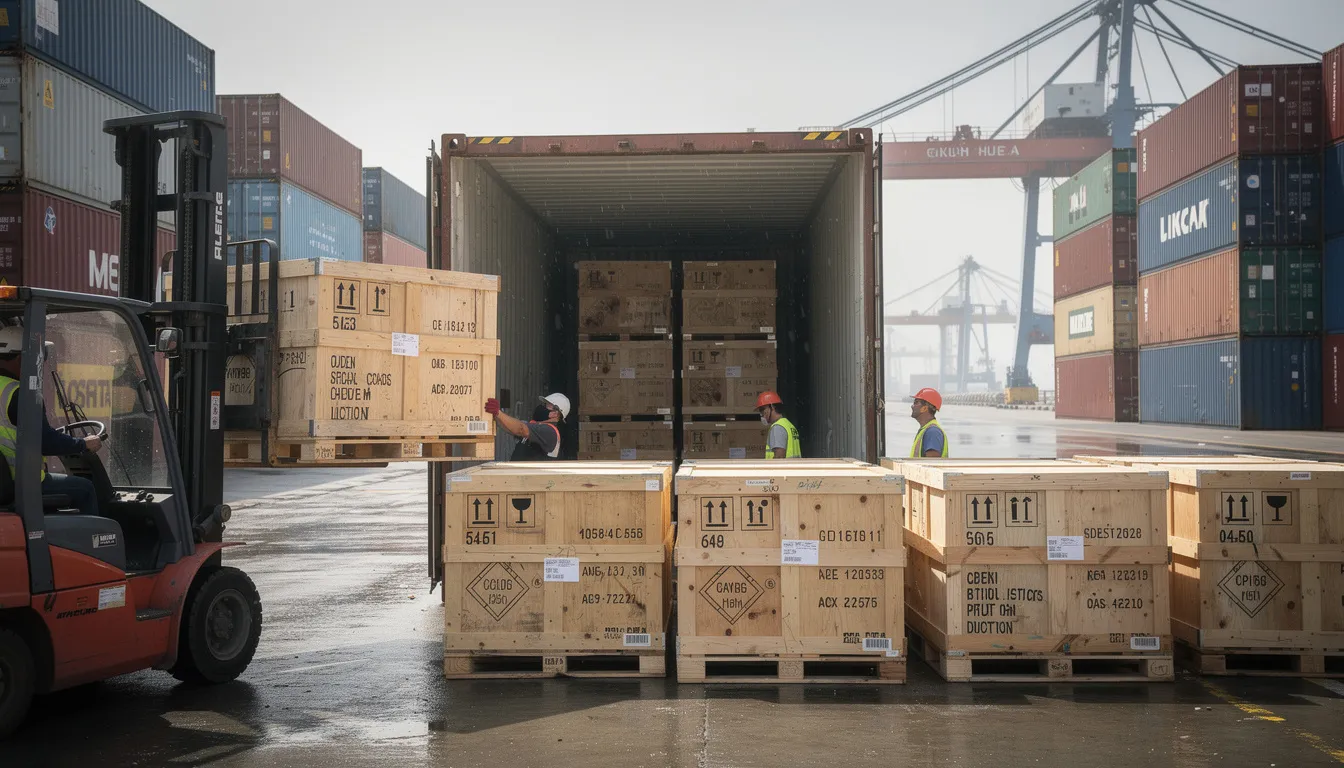
Most export journeys include at least one inland leg by truck or rail, introducing continuous vibration, sudden braking forces, potholes and shunting impacts on rail wagons. These stresses accumulate over hundreds or thousands of kilometres from inland factories to coastal ports.
Secure unit load requirements:
Route-specific considerations affect packaging design. Long-distance road hauls from Eastern European manufacturing sites to Western European ports may involve 2,000+ km of varied road quality. North American inland routes from Midwest factories to East Coast ports present similar challenges. Heavy items require additional protection against sliding within cartons during transit.
Regional regulations impose weight and size limits for road vehicles, affecting pallet dimensions and stack heights. European roads typically have 2.4m width limits and 24-tonne payload maximums, constraining unit load configurations.
For exporters with established routes and return logistics, reusable packaging systems—collapsible crates, plastic pallets, modular containers—can reduce per-shipment costs. This is most viable on regional routes with predictable backhauls and willing partners at both ends.
The cheapest-looking packaging often proves the most expensive once damage claims, rework, customer returns and reputational impact are calculated. A lightweight carton that saves £2 per unit becomes a liability when 8% of shipments arrive damaged, triggering replacement costs, freight for re-shipment and lost customer confidence that affects future orders.
Export packaging must be evaluated within the total landed cost framework:
Cost Component | Packaging Impact |
|---|---|
Product | N/A |
Packaging materials | Direct cost |
Freight | Weight and volume affect charges; optimised packing reduces fees |
Insurance | Better packaging may reduce premiums; poor packaging leads to rejected claims |
Duties | Weight-based tariffs increase with heavy packaging |
Post-delivery issues | Damage claims, returns, customer compensation |
Smart packaging design addresses all these factors simultaneously. A manufacturer switching from off-the-shelf cartons to tailored packaging solutions may spend 15% more on raw materials while saving 25% on volumetric freight charges—a net reduction in landed cost with additional protection benefits.
Practical approaches to cost-effective export packaging include:
Working with a freight forwarder during packaging design enables modelling of how different configurations affect shipping rates. Carriers calculate charges based on actual or volumetric weight (whichever is greater), making pack density a direct cost lever. Warehouse handling costs also decrease when packages are consistently sized and easily stacked.

By 2026, many of the UK’s major export markets will regulate packaging waste and require recyclability standards. The EU Green Deal aims for 50% recycled content in packaging by 2030. Extended Producer Responsibility (EPR) schemes in Germany, France and other countries require exporters to register, report and contribute to packaging recovery systems in destination markets.
Export packaging choices affect both environmental impact and compliance status:
Market | Key Requirement |
|---|---|
EU | Packaging and Packaging Waste Directive; EPR registration; recycling symbols mandatory |
Canada | Provincial regulations varying by territory; recyclability standards |
Japan | Containers and Packaging Recycling Law; material identification requirements |
Australia | Australian Packaging Covenant; targets for recyclable, reusable, or compostable packaging |
Non compliance with destination country rules can result in fines, shipment holds or requirements to remove and replace packaging before goods enter the market – costs that far outweigh the savings from using non compliant materials.
Practical sustainable practices in export packaging include:
Example: A UK exporter to Germany redesigned consumer goods packaging in 2024-2025, replacing multi-layer composite films with mono-material alternatives, reducing plastic content by 40% and adding clear recycling codes. The changes met EPR requirements, reduced waste charges and improved retailer acceptance in a market increasingly focused on sustainability credentials.
Non compliant packaging triggers costly consequences: customs holds delaying delivery by weeks, fumigation fees at destination ports, repacking under supervised conditions or outright refusal of entry requiring return shipment or destruction. These failures are avoidable with careful consideration of applicable packaging standards before first shipment.
Packaging standards are critical for compliance and export packaging must comply with international shipping standards to ensure all required documents are issued and released with your product.
International test standards such as ISTA, ASTM and ISO are commonly referenced for export packaging. Items classified as hazardous must use UN certified packaging and display specific hazard labels according to regulations.
Framework | Scope | Key Requirement |
|---|---|---|
ISPM 15 (IPPC) | Wood packaging in international trade | Heat treatment or fumigation; permanent marking |
IATA DGR | Dangerous goods by air | Specific packaging, labelling, and documentation for hazardous goods |
IMDG Code | Dangerous goods by sea | UN-approved packaging; segregation requirements |
SOLAS | Container weights | Verified Gross Mass declaration before vessel loading |
REACH | EU chemical restrictions | Restrictions on certain substances in packaging materials |
Recognised packaging test standards—ASTM, ISO and ISTA protocols—provide documented evidence that packaging will withstand export conditions. Test reports demonstrating compliance with standards such as ISTA 3A or ISO 2206 give confidence to buyers, insurers and regulatory authorities.
Exporters must monitor regulatory changes continuously. Packaging compliant in 2023 may require updates for 2026 shipments as international standards evolve, plastic packaging taxes expand and dangerous goods classifications are revised. Establishing a compliance monitoring process prevents shipments being rejected for outdated specifications.
Most countries now require wood packaging materials—pallets, crates, dunnage—used in export to be treated and marked in accordance with ISPM 15, the international standard preventing the spread of forest pests and timber diseases across borders. Over 100 countries enforce these requirements, with many others adopting similar measures.
Approved treatments:
The ISPM 15 mark must be permanent and legible, displaying:
Example: A UK exporter sending industrial equipment to Australia or the United States requires ISPM 15-marked pallets. Australian biosecurity authorities actively inspect incoming cargo; unmarked or non-compliant timber triggers quarantine detention, fumigation at the importer’s expense or re-export. Even mixing compliant and non-compliant timber in the same consignment can trigger full inspection and rework.
Using ISPM 15-certified packaging suppliers with documented quality control prevents shipments being rejected at the consignee’s port—a scenario that damages customer relationships and incurs substantial unbudgeted costs.
Even great packaging fails commercially if documentation and labels are incomplete, inaccurate or illegible. Customs, carriers and consignees rely on external information to route, clear and handle the shipment correctly.
Required documentation:
A packing list should include:
Outer packaging labelling:
Common symbols understood across languages and by handlers in other countries include:
Symbol | Meaning |
|---|---|
↑↑ | This Way Up |
Wine glass | Fragile |
Umbrella | Keep Dry |
Sun with X | Protect from Heat |
Hooks with X | Do Not Use Hooks |
Labels must be weather-resistant, securely attached, and positioned for visibility. Digital copies of all packing documentation should be maintained and aligned with physical markings to expedite queries from customs authorities, carriers, or insurance assessors during the shipping process.
Labels must be weather-resistant, securely attached and visible. Digital copies of all documentation should be maintained and aligned with physical markings to speed up queries from customs, carriers or insurance assessors during the shipping process.
For certain export shipments, standard packaging just isn’t enough. Specialised packaging solutions are required when shipping unique, high value or hazardous goods that need extra protection and compliance to international shipping standards. For example, custom designed shipping crates and reinforced pallets are often used for machinery or oversized cargo to keep these heavy items secure throughout their journey.
For air cargo, packaging materials and designs must be tailored to the specific challenges of air travel – temperature and pressure changes. This might involve using advanced cushioning materials, sealed containers or reinforced cartons that meet IATA and other regulatory requirements.
Shipping dangerous or hazardous goods requires careful consideration of both the packaging method and materials used as international regulations demand special containers and clear labelling to minimize risk during transit.
Exporters and freight forwarders must work together to develop these special packaging solutions. By working together they can ensure every aspect of the packaging – from materials to crate and container design – meets the specific needs of the cargo and complies with all relevant international regulations. This planning provides extra protection for valuable or sensitive goods and prevents costly delays, fines or safety incidents during international shipping.
Export packaging providers with experience reduce risk when businesses go global, especially for complex shipments of machinery, temperature controlled pharmaceuticals or high value electronics. The right partner brings expertise that internal teams may not have and catches specification errors before they cause shipment failures.
Capability | Why It Matters |
|---|---|
ISPM 15 certification | Ensures wood packaging compliance for global destinations |
International regulations knowledge | Prevents compliance failures in target markets |
In-house design facilities | Enables custom solutions optimised for specific products |
Testing capabilities | Validates packaging against ISTA, ISO, or ASTM protocols |
Industry experience | Understands sector-specific requirements (engineering, food, pharma) |
Sustainable materials options | Meets destination-country environmental requirements |
Supplier selection based on unit price only overlooks critical value factors:
Site visits and joint packaging reviews – where engineers assess current export packs, identify failure points and propose improved designs – provide value before large scale production runs. A packaging partner willing to invest time to understand specific export routes and product characteristics demonstrates commitment beyond transactional supply.
Good partners will provide pack specifications, test reports and compliance certificates to support customs clearance, insurance validation and customer quality requirements. This documentation is part of the overall solution not an optional extra.

Packaging should be considered concurrently with product design and route selection – ideally several months before the first overseas shipment. This allows for prototype development, transit testing under realistic conditions, supplier qualification and resolution of any regulatory issues such as ISPM 15 certification or destination country material restrictions. Waiting until products are ready to ship often results in last minute decisions, inadequate protection or compliance failures that delay market entry.
Export shipments face longer transit times, more handling touchpoints, greater environmental variation and stricter regulations. Exporters need upgraded packaging materials with higher burst and compression ratings, better unitisation for container transport, ISPM 15 compliant wood packaging and additional protection measures such as barrier films or desiccants. Using domestic specs for export orders often results in damage rates that damage customer relationships and profitability.
Reusable packaging systems – collapsible crates, plastic pallets, modular foam inserts – are viable where reverse logistics infrastructure exists. Feasibility depends on several factors: reliable return transport arrangements, labour costs for inspection and reconditioning at the receiving end, customs rules regarding temporary imports of returnable packaging and sufficient shipment volume to justify the system. Closed loop arrangements work well on established routes with cooperative partners but require careful consideration of total system costs versus single use alternatives.
Marine cargo insurers will review whether the packaging was suitable for the voyage when assessing claims. Inadequate or clearly substandard packing – such as single wall cartons for heavy components on a 40 day sea voyage – can result in reduced payouts or claim rejection. Exporters should document packaging specifications, retain test reports demonstrating compliance with recognised standards and ensure packaging meets or exceeds conditions specified in the insurance policy. Photos of packed goods before shipment provide additional evidence to support claims when damage occurs despite proper packaging.
Many industries have packaging and labelling requirements beyond general export standards. Chemicals need to comply with UN packaging specs and GHS (Globally Harmonized System) labelling for dangerous goods. Pharmaceuticals require validated packaging to maintain product stability throughout the cold chain where applicable.
Food exports have phytosanitary requirements, temperature control standards and material restrictions by destination country. Lithium battery electronics need to meet IATA or IMDG dangerous goods packaging requirements depending on the transport mode. Exporters should check sector specific regulations and where necessary engage specialist advice before sending production shipments.